Above All Else
Have fun. Make it your own. While this book presents the core rules of RISE as well as character options, every group of players and GM may have a slightly different approach or preferences that works for their table. With group agreement, adjust the rules or rulings to enhance the game for your group to make it as fun as possible! In Section X, you can even find some suggested rule adjustments that may be fun for your table.
Flow of the Game
Because the GM facilitates and arbitrates the rules, if there is a question or unclear rule in RISE on how it applies to a particular situation, the GM can make case by case rulings based on the circumstances in the story. There may even be instances where a RISE rule as written doesn’t make sense for the narrative. In that instance, the GM is encouraged to make a ruling that flows with the story.
Roleplaying
Explain the mechanics of “roleplaying” here.
Rolling The Dice
The 3d6 system
RISE exclusively uses six-sided dice, called “d6” for gameplay. Skill Tests require you to roll three of these dice (3d6), making RISE a 3d6 system. Occasionally you will need to roll other amounts of six-sided dice which will be noted as 1d6, 2d6, etc.
To play RISE, you will want to have at least three six-sided on hand, although having four or five can make some damage rolls or rolling with advantage a bit faster and more fun!
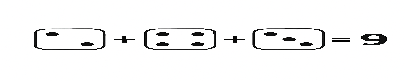
When rolling multiple d6 at a time, the result is found by adding the number on each die together. So, a roll of 2, 4, 3 = 9.
Skill Test Rolls: How to Attempt an Action
Skill Tests are the dice rolls that determine most outcomes in RISE. They may be called for directly by the GM, by rules or abilities, or be prompted by PCs who are attempting something that has an aspect of uncertainty in success.
Directly called for by GM: “Battle has started - Make a Perception Initiative roll!”
Called for by rules: After taking a Short Rest, you recover HP equal to the result of an Endurance Recovery test.
Attempting an action: PC: “I want to convince the innkeeper to give me a better deal.” GM: “Go ahead and make a Persuasion, Romance, or Intimidation roll depending on how you are trying to convince them.”
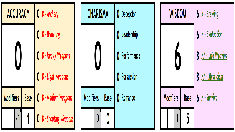
Whenever prompted to make a Skill Test, this is done by rolling 3d6 and adding the result to your character’s Skill. From the example above, the PC decides to romance the innkeeper into getting a good deal. In that case, they would add “0” (the number next to Charisma (Romance) to their 3d6 roll to get the Test Result.
Target Numbers (TN) & Difficulty
A Target Number is the predefined threshold for success on a Skill Test roll. If the Test Result is greater or equal to the TN — Success!
When there is a tie between a Skill Test result and Target Number, follow the “meets it beats it” rule. Additionally, if there is a tie between an attack and a character’s Evasion or a tie between two skill rolls, use the “tie goes to the attacker” rule to make a final determination.
If an Action pre-defines a TN, you will either succeed or fail to accomplish that action as written. Otherwise, the GM will inform the relative success or failure of the test, along with any benefits or consequences as befits the narrative.
Advantage & Disadvantage
During the game, character abilities or status conditions may grant your character Skills with "advantage" or “disadvantage.” With advantage, you will roll 1 extra die (or 2 for double advantage) with your test roll, and may take the 3 highest results. A disadvantaged roll means you take the lowest 3 results.
If you are using the digital character sheet and have properly marked your Skill ranks and status conditions, these conditions will display in front of the Skill name with red or green text indicators.
DD - Double Disadvantage
D - Disadvantage
A - Advantage
AA - Double Advantage

When rolling with advantage, players may choose to take a lower roll if it generates more FP. For instance, if rolling with advantage yields a roll of 3, 4, 5, 3, a player could choose the 3, 3, 5 rather than a 3, 4, 5 in order to generate 3 FP.
Legendary Rolls & Critical Failures
When rolling 3d6 Skill Tests in RISE, the most exciting results are known as “legendary” rolls and “catastrophe” rolls which are the highest (6, 6, 6) and lowest (1, 1, 1) you can get.
A legendary roll is not necessarily considered an automatic success, although the high dice roll may mean that it is more likely to succeed. As with any Skill Test, a success is still determined by the Target Number and GM discretion.
Feat System
Feat points are generated whenever you roll doubles or triples in a Skill Test roll, gaining the same or double the amount of FP. Therefore, a roll of 2, 5, 5 will generate 5 FP, whereas a roll of 5, 5, 5 will generate 10. However, a failed Skill Test (GM discretion) will not generate FP.
Players start a new session with an amount of FP equal to their Heart Attribute score. There is no limit to the FP you can collect. However, FP lasts only until the end of each session. A “legendary” roll of 6, 6, 6 generates 12 FP and also allows players a free use of the Legendary Feat (normally 24 FP), whereas a “critical failure” roll of 1,1,1 is an automatic Skill Test failure, resulting in any FP stored going to 0 as your character has lost all their inspiration and momentum in this moment.
Standard Feats
All characters start with a standard set of feats at Level 1.
| Feat | FP Cost | Description |
|---|---|---|
| Prepare Action | 1 FP | Use this before using a major action on your turn. Select one major action that you will prepare to execute and then end your turn. Any time until your next turn, you may interrupt another character and take your prepared action immediately. If you don’t use the action by your next turn, the prepared action is lost. |
| Sneak Attack | 1 FP | A special type of Melee or Ranged attack in which the attacker must be Hidden from the target. IF this condition is met, then the attacker gains advantage on their attack roll and can reroll 1's on their damage roll. (NOTE: Performing a Sneak Attack will result in losing the Hidden Status.) |
| Attack of Opportunity | 1 FP | During combat, if an adjacent foe enters or is within melee range of your weapon and attempts to leave that melee range, you may immediately make a melee attack against them. |
| Targeting Attack | 1 FP | Use this before your attack roll. Select one body part from the Targeting List and declare that to be what you are attacking. The target's evasion is considered to be increased by the amount listed depending on where you have targeted. If you are successful, the target suffers from the additional effect that is listed, if you are unsuccessful then your attack is considered to have missed. Some creatures may be immune to certain targeting attacks. Successful Targeting Attacks unlock the ability to use additional Feats. |
| Reroll | 4 FP | Prior to accepting any FP on your current roll, you may reroll your current skill test. |
| Legendary Feat | 12 FP | Automatically succeed on an attempted skill test. Within Reason. (GM discretion) |
Status Conditions
Dying
- Effect:
- Character is reduced to 0 HP
- Gain the Prone status condition
- Any further damage results in death.
- If a character has all 10 Debuff Conditions they will die.
- Recovery:
- Self: Use "Grit" action (gained via End (Recovery) skill rank) to stabilize at 1 HP.
- Ally: First Aid action, healing spell, or potion.
- Upon Recovery: Character is revived at 1 HP and gains a lingering condition depending on how many rounds they were Dying:
- 1 round/min: Slowed
- 2 rounds/mins: Slowed, Fatigued, Weakened
- 3 rounds/mins: Immobilized, Fatigued, Weakened, Clumsy, Dismayed
- Strategic Niche: Adds urgency and decision-making to combat; characters can linger near death but are fragile and need quick intervention.
Poisoned
- Effect: Character takes poison damage at the start of their turn, which doubles every round until cured. Initial damage is based on the poison's strength.
- Application: Via injury, inhalation, or ingestion from an alchemical poison, natural toxin, or the venom of a creature.
- Recovery:
- Self: End (Vitality) test at the end of each turn (does not use an action, TN based on poison strength).
- Ally: Advanced First Aid action, or an appropriate spell
- Potion: depends on poison strength
- Time: Effect ends after 3 turns
- Strategic Niche: High-risk condition with escalating damage; demands urgent attention or quick support.
| Poison/Toxin/Venom Rarity | End (Vitality) or (Recovery) TN | Initial Poison Damage (turn 1) | Max Total Poison Damage (3 turns) |
|---|---|---|---|
| Common | 10 | 1 | 7 |
| Uncommon | 13 | 2 | 14 |
| Rare | 16 | 4 | 28 |
| Epic | 19 | 8 | 56 |
| Legendary | 22 | 16 | 112 |
Burning
- Effect: Character takes 1d6 damage at the end of their turn. Burning can spread to nearby characters upon contact.
- Application: Via contact with a burning object, secondary effect of a spell, or environmental hazard
- Recovery:
- Self: End (Recovery) test at the end of each turn.
- Ally: Activate action - risks setting themselves on fire with a failed TN 12 Dex (Legerdemain) test (no test required if a water source is used), or an appropriate water spell
- Potion: not applicable
- Time: not applicable
- Strategic Niche: Mid-tier damage with spreading potential; punishes reckless positioning and encourages teamwork.
Bleeding
- Effect: Character takes 1 damage after each minor action, 2 damage after each feat used, and 3 damage after each major action.
- Application: Secondary effect of some attacks or spells
- Recovery:
- Self: End (Recovery) test at the end of each turn.
- Ally: Activate action - risks setting themselves on fire with a failed TN 12 Dex (Legerdemain) test (no test required if a water source is used), or an appropriate water spell
- Potion: not applicable
- Time: not applicable
- Strategic Niche: Low damage but consistent tactical pressure; promotes coordinated recovery.
Slowed
- Effect: Movement speed is halved; character cannot use the Sprint action.
- Recovery: End (Recovery) test.
- Strategic Niche: Limits battlefield mobility and escape potential, often the result of leg injuries or terrain effects.
Exhausted
- Effect: Character cannot use Major Actions.
- Recovery: Rest or End (Recovery) test.
- Strategic Niche: Represents peak fatigue or overexertion; greatly reduces combat options.
Tipsy
- Effect: Advantage on Hrt (Courage) tests; disadvantage on all Dexterity-based skill tests.
- Recovery: Ends after a short duration or through rest.
- Strategic Niche: Light inebriation with mixed benefits; often a narrative or prelude state to drunkenness.
Drunk
- Effect: Disadvantage on all skill tests, evasion halved, and reduced inhibition (may act impulsively).
- Recovery: Extended rest, sobering remedies, or time.
- Strategic Niche: Severe impairment with roleplay implications; escalates from Tipsy and introduces risk.
Paralyzed
- Effect: Cannot take physical actions or cast spells requiring somatic components. May still speak and move eyes.
- Recovery: End (Recovery) test or medical treatment.
- Strategic Niche: High-impact disabling effect; total physical lockout often from powerful effects or critical hits.
Silenced
- Effect: Character cannot speak or use vocal components. Verbal spellcasting is disabled.
- Recovery: End (Recovery) test or magical aid.
- Strategic Niche: Prevents communication and spellcasting; useful counter to casters.
Cursed
- Effect: Cannot gain or spend FP to use feats.
- Recovery: End (Recovery) test or divine intervention.
- Strategic Niche: Locks out a core character resource, weakening specialized builds and combos.
Blessed
- Effect: Gain advantage on End (Recovery) tests and +1 to all skill tests.
- Recovery: Ends after duration expires or is dispelled.
- Strategic Niche: Positive buff that encourages preemptive or reactive support play.
Dazed
- Effect: Disadvantage on Perception, Initiative, and Intelligence-based tests.
- Recovery: End (Recovery) test.
- Strategic Niche: Represents mental disorientation, often from head injuries; impairs awareness and reaction time.
Stunned
- Effect: Lose next Major Action.
- Recovery: Ends automatically after 1 round or effect duration.
- Strategic Niche: Temporary but impactful action denial; often paired with high-damage setups.
Unconscious
- Effect: Cannot act or perceive surroundings. May be awakened by damage, noise, or an ally's action.
- Recovery: Healing, time, or End (Recovery) test (if conditionally stable).
- Strategic Niche: Represents total incapacitation; critical vulnerability state.
Impaired (Arm Injury)
- Effect: Disadvantage on all attacks, spells, and skill tests requiring manual dexterity or strength. Cannot use two-handed weapons or perform precise actions.
- Recovery: End (Recovery) test or treatment.
- Strategic Niche: Tactically limits options and weapon use; rewards limb-targeting and healing coordination.
Status by Targeted Body Injury:
- Head: Confused
- Eyes: Unaware
- Neck:
- Arms: Shaky
- Legs: Clumsy
- Vitals/Torso: Fatigued